
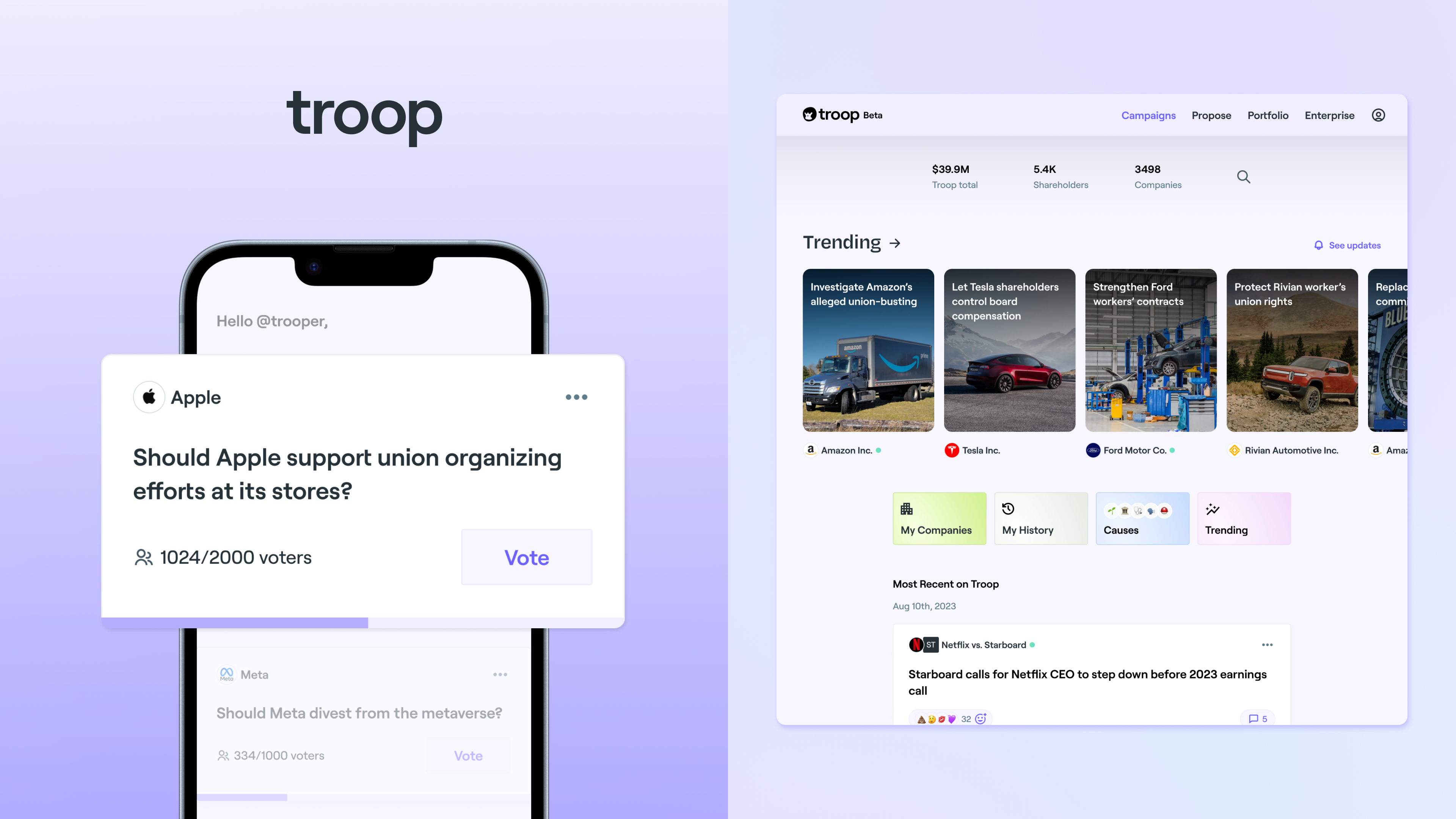
In 2021, I co-founded Troop, a fintech platform designed to educate retail investors on proxy voting and ESG issues, empowering them to vote their shares and influence corporate change. Inspired by the Engine No. 1 Exxon Mobil campaign and r/wallstreetbets, the platform championed stakeholder capitalism and promoted corporate accountability to employees, communities, and the environment.
In recent years, retail investors have become more engaged in capital markets than ever before—purchasing $292B in U.S. stocks and ETFs in 2021, seven times more than in 2019. Seizing the opportunity to engage them in corporate governance, we built an app to facilitate proxy voting, pool voting power, and connect users with activist funds.
User Research
Zen Yui
Cassidy Donohue
Felix Tabary
Brooklyn, NY
React Native App
Design System
The platform focused on intuitive and impactful features to motivate retail investor participation in corporate governance. We addressed their knowledge gaps, encouraged collective action, and tailored the experience to their stock portfolios by securely connecting brokerage accounts. Some highlighted features were:
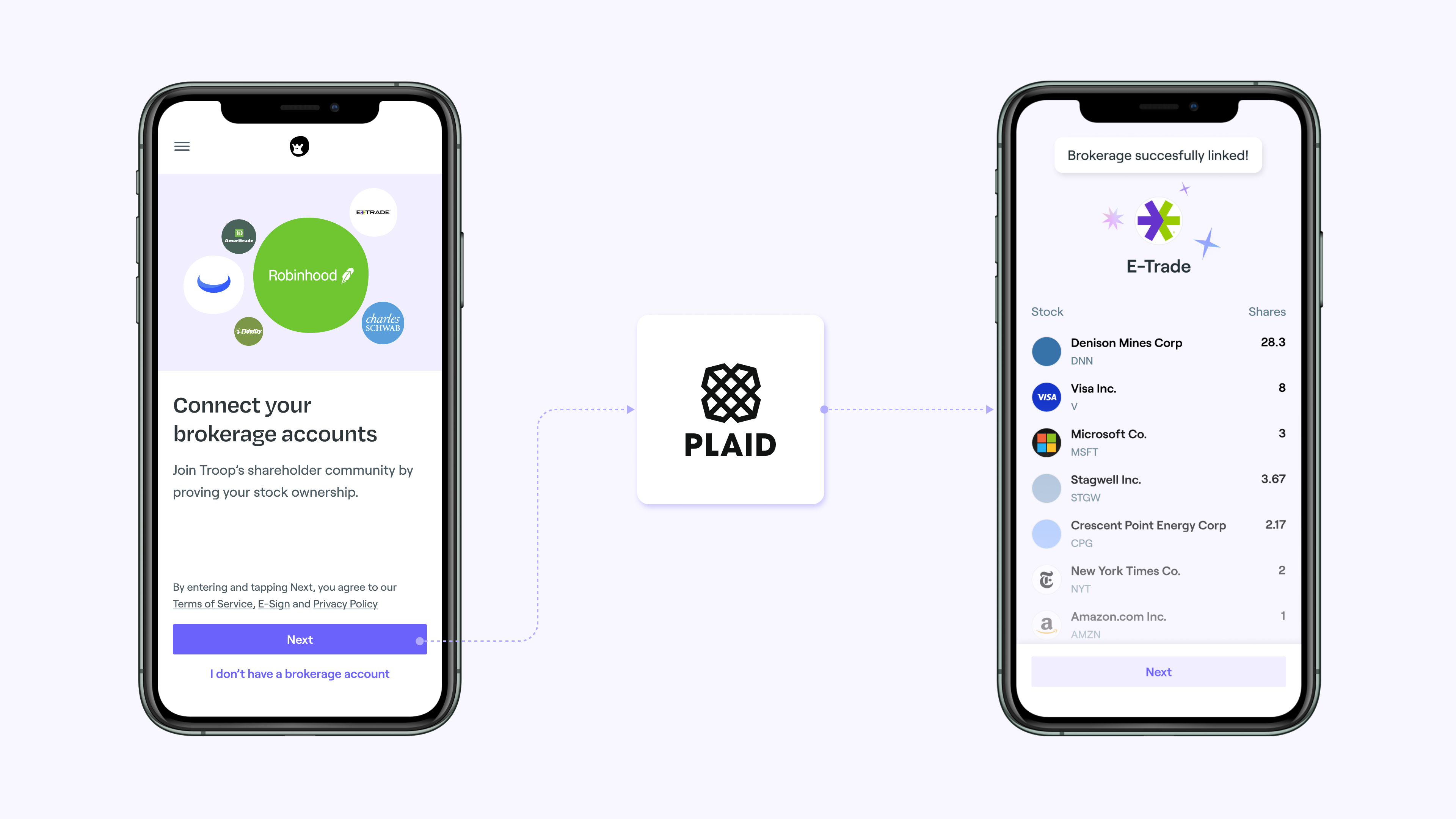
Connect brokerage accounts securely through Plaid and SnapTrade, offering a smooth onboarding process that builds user trust and tailors the experience to their portfolio.
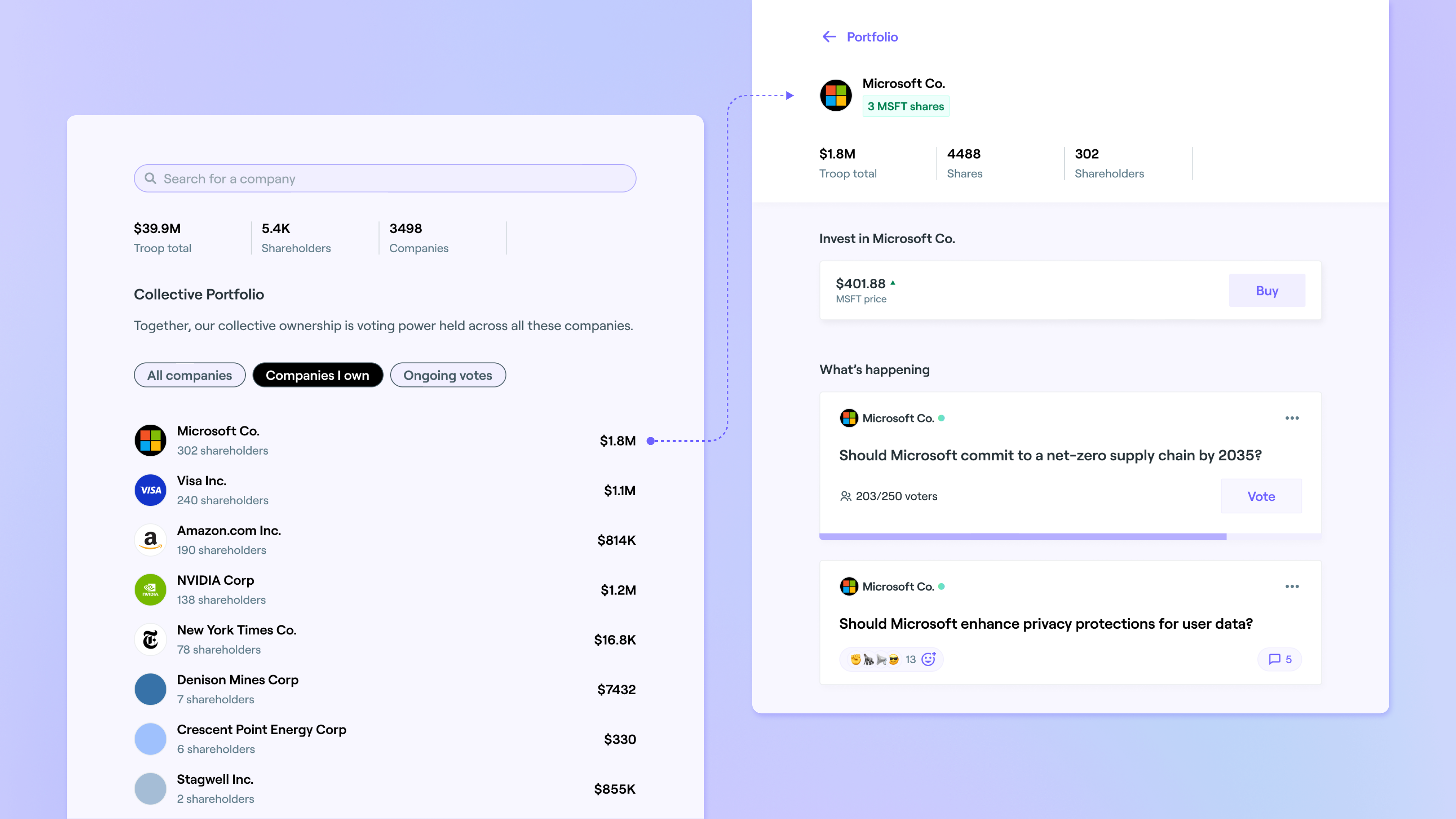
An all-in-one database that showcases the combined stock ownership of Troop members, with detailed company profiles, performance metrics, and active ESG initiatives.
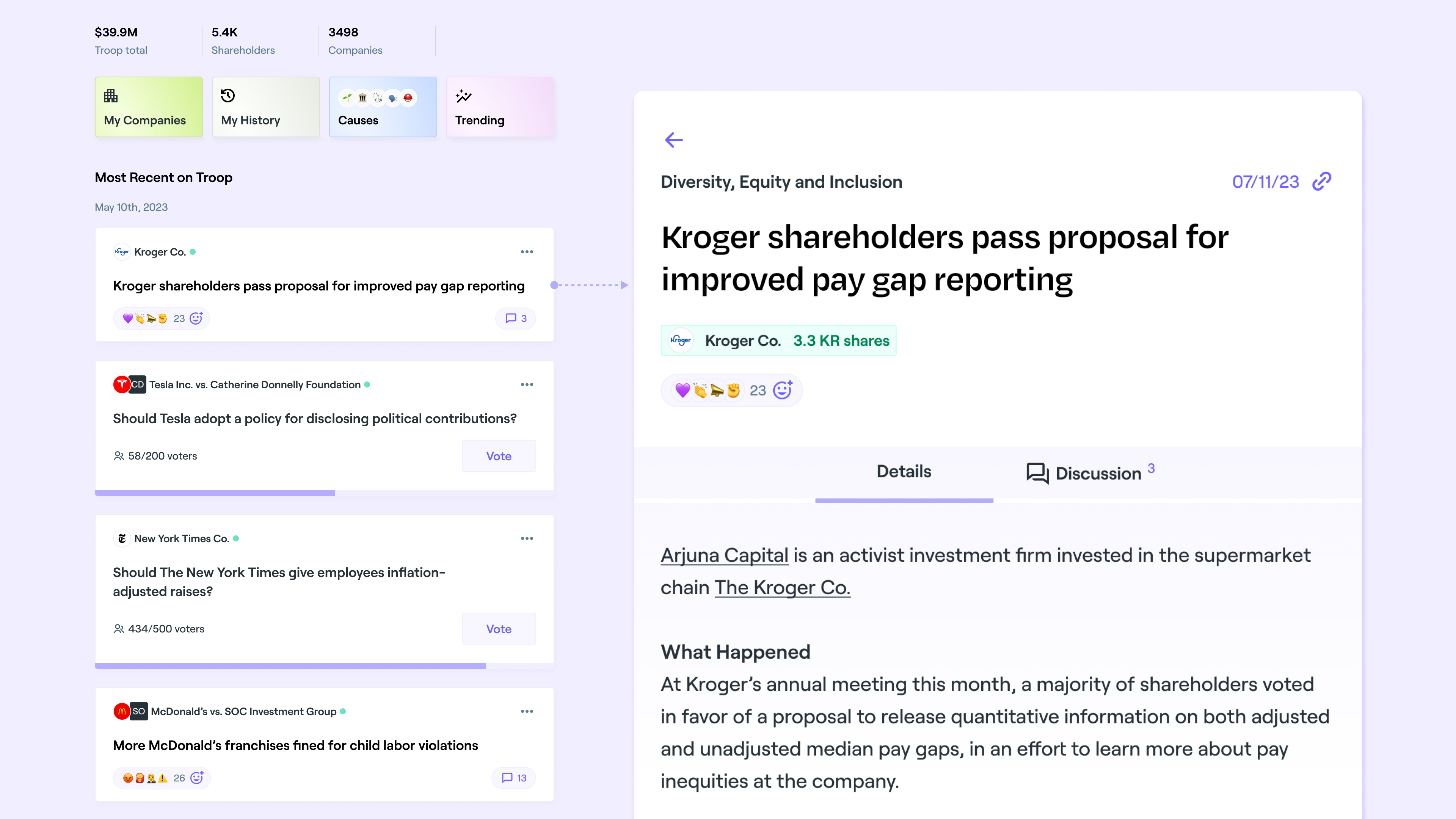
An interactive feed offering updates on shareholder activism campaigns and highlighting efforts directed at companies within users' portfolios to keep them informed and engaged.
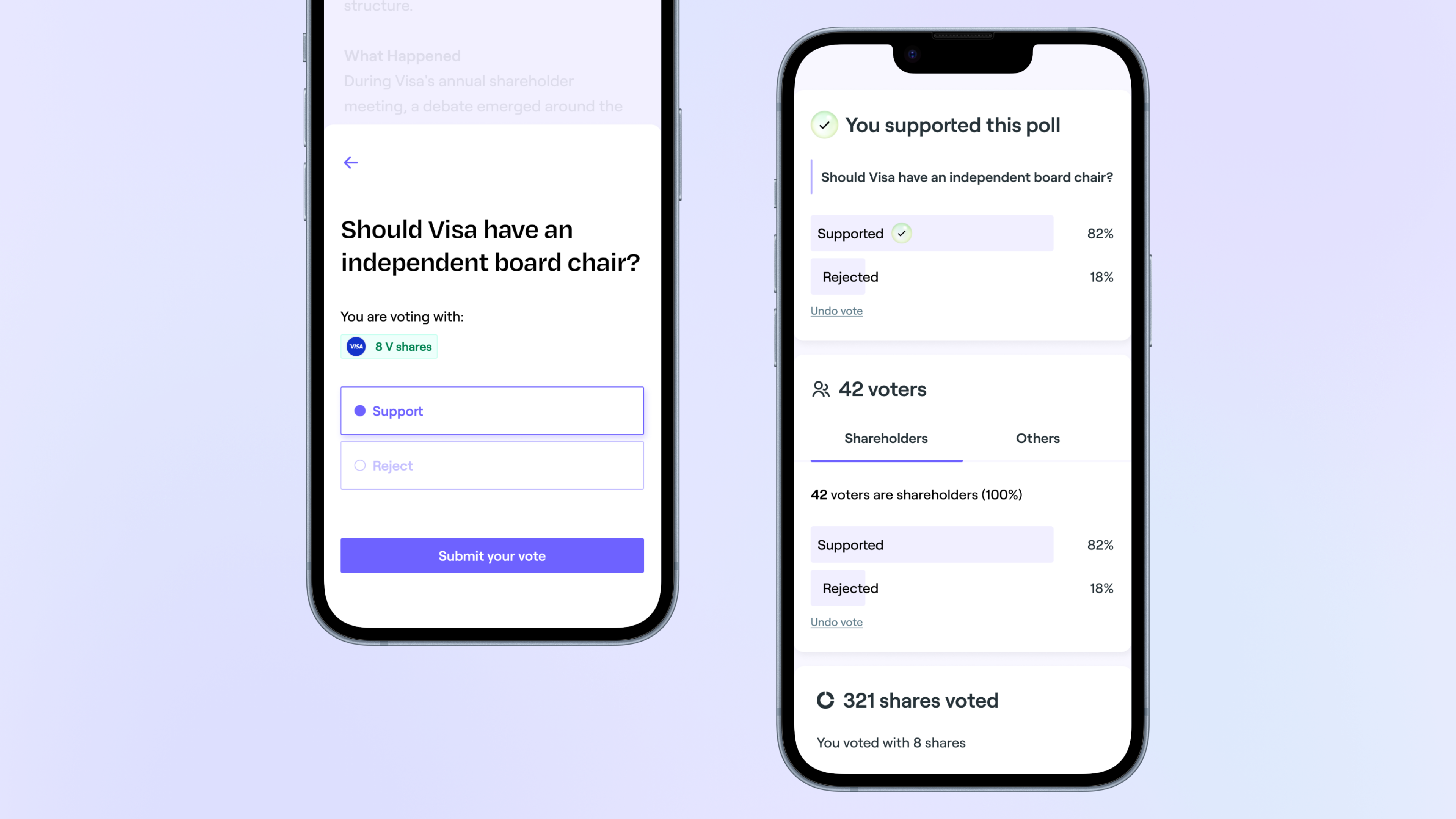
Polling and voting features designed to capture and measure user sentiment on key proposals and initiatives which fostered engagement and collective decision-making.

Community-oriented social features, including discussions and reactions, to push for collaboration and collective action among users.
Retail investors have become a significant force in the U.S. stock market. Collectively, they hold substantial unvoted shares yet still face barriers to meaningful participation in corporate governance.
The rise in retail ownership—sometimes exceeding 30% in some public companies—has made retail investor participation increasingly urgent. Without it, institutional investors and companies face governance challenges.
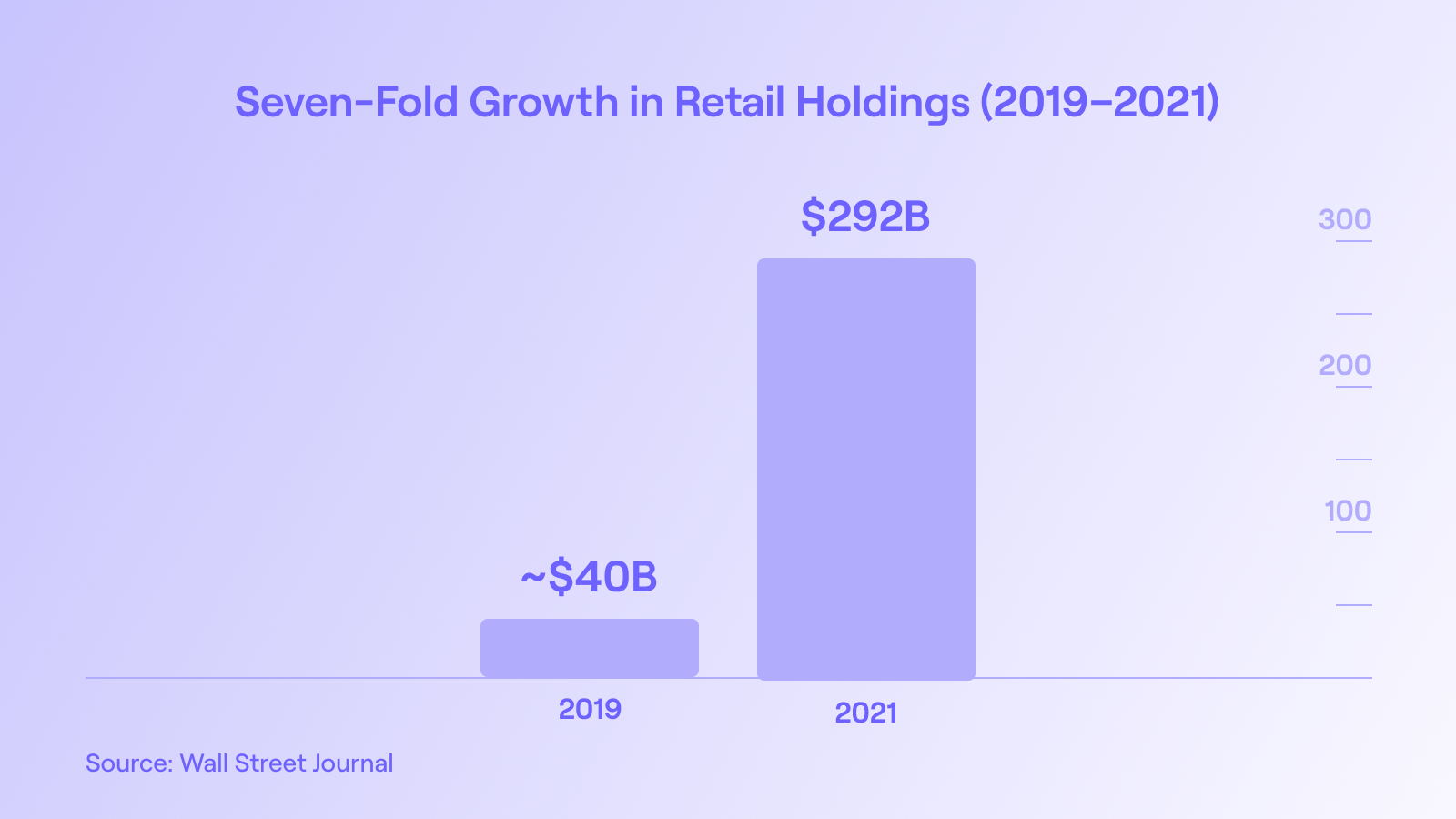
In 2021, retail investors held $292B worth of stocks and ETFs (seven times more than in 2019), yet their voting power remained largely untapped.
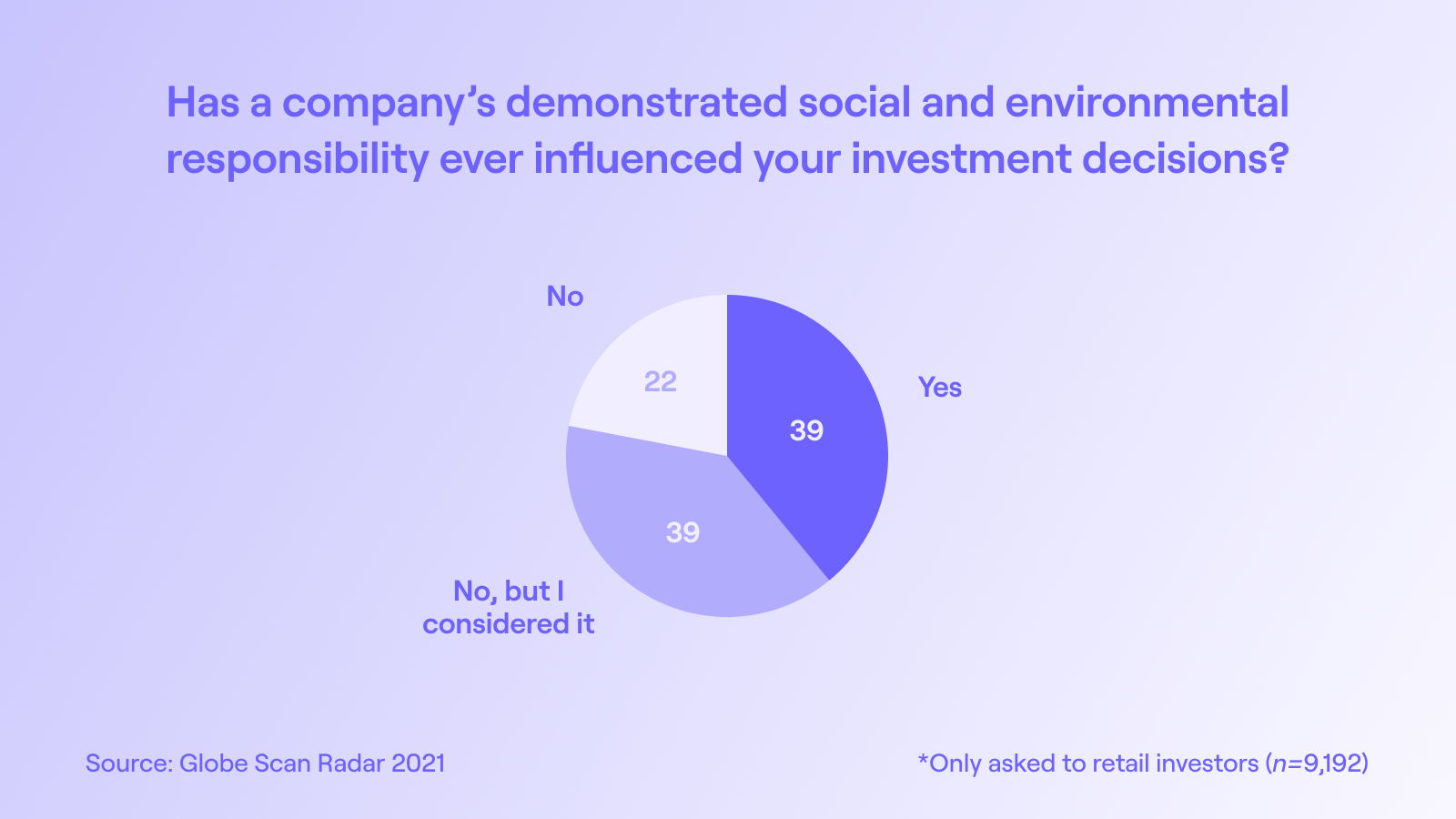
8 out of 10 retail investors say a company’s ESG performance influences their investment decisions, but one in three lack the knowledge to act on these values.
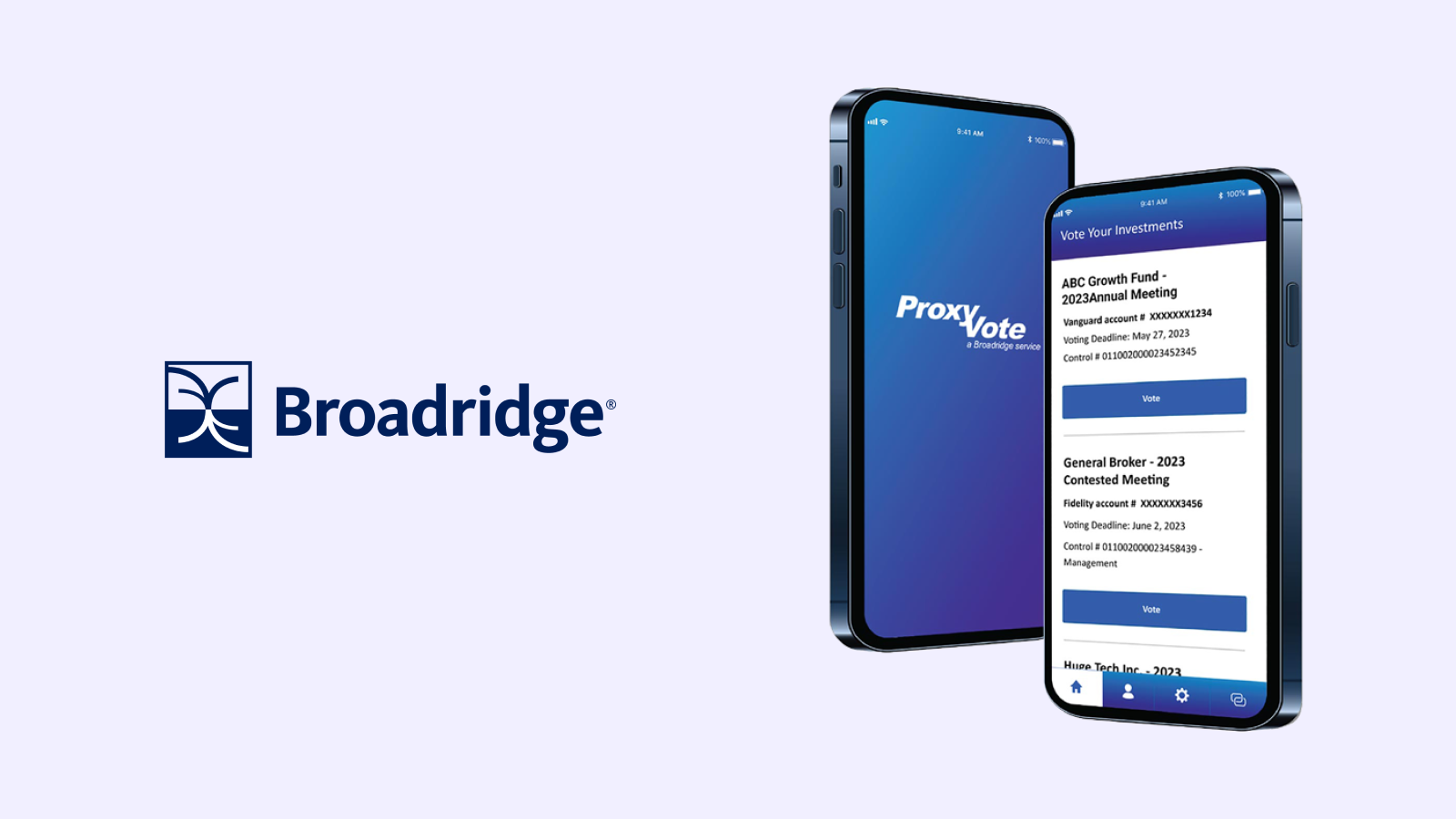
Proxy voting tools (e.g., Broadridge) are still outdated and not designed for retail investors, making the process inaccessible.
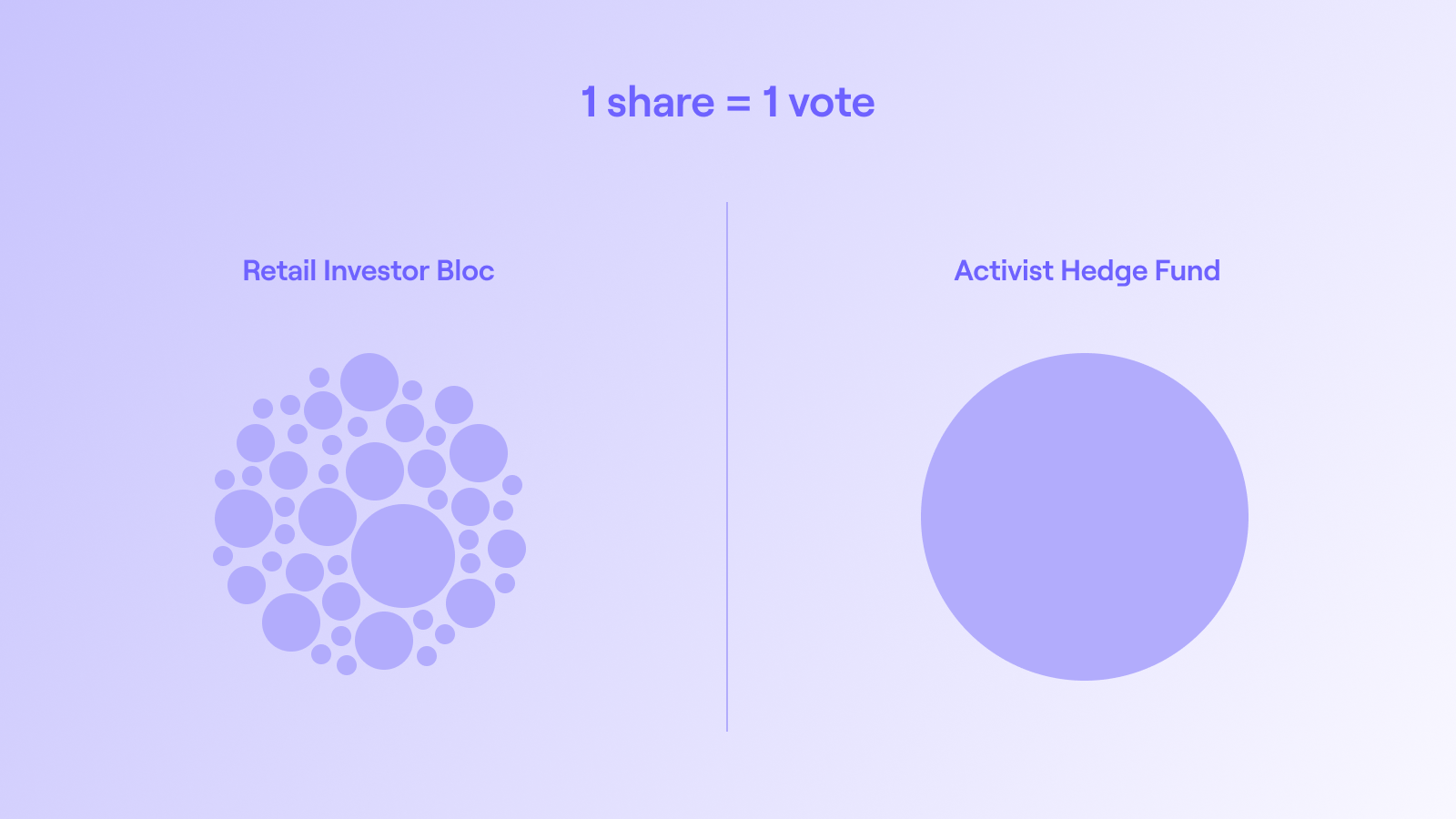
Many retail investors feel their individual votes have little impact in corporate governance, but are eager to join a unified activist bloc to influence proxy contests and drive meaningful change.
Motivated retail investors want their votes to influence corporate decisions, but fragmented voting power limits their impact on proxy outcomes. How might we enable them to act collectively so they can drive decisions at scale?
Troop aimed to address these challenges by focusing on three key areas:
- Reducing the information gap between institutional and retail investors.
- Highlighting the collective voting power of retail investors to demonstrate their potential impact at scale.
- Fostering connections among retail investors, activist funds, shareholder advocacy groups, and employee unions to amplify their influence in proxy contests.

As a startup launching an MVP, we operated in a constant feedback loop to ensure our solutions met user needs. Our approach combined:
- User testing: Weekly sessions to validate workflows, refine features, and improve usability.
- Interviews: Conversations with retail investors to uncover motivations, pain points, and desired tools.
- Industry expertise: Collaboration with activist investors, proxy solicitors, shareholder advocacy groups, and labor organizers to align with professional needs. We had the pleasure to learn from individuals at As You Sow, Starboard Value, Georgeson, and A Better ABK, among others.


Convincing users to connect their brokerage accounts was a significant challenge. Even with a trusted integration like Plaid, users hesitated to link their assets, especially to a new platform.

ESG priorities varied across users. Generally speaking, those focused on environmental and social issues preferred automated solutions, given their limited financial expertise and bandwidth. Governance-focused users, by contrast, tended to be more financially savvy, already engaged in shareholder activism, and looking for tools to organize and amplify their efforts. This latter group formed our early core community.

Shareholder activism activity is highly seasonal, centering around annual general meeting (AGM) season in the spring and early summer, with occasional bursts during special proxy contests.

Many users were motivated by a single issue or a small set of causes, rather than seeking to engage broadly across ESG topics.

Our platform began to attract attention from institutional players, who saw it as a way to gauge retail sentiment on key issues. This sparked internal concerns around potential conflicts of interest. We found ourselves repeatedly reconsidering our core allegiance: should we remain focused on retail investors, or pursue alignment with activist funds and proxy solicitors, where the path to monetization was clearer?
Rooted in key insights and fintech best practices, our design principles addressed the unique needs of retail investors:
Throughout the development of Troop, we tackled several design challenges to address user needs, improve engagement, and enhance the overall experience.
Connecting brokerage accounts presented significant friction in the onboarding flow, both in terms of technical reliability and user trust. We integrated with Plaid, but because of its black-box limitations, we had little visibility into why connections failed, why certain brokerages took longer to load, or why MFA (multi-factor authentication) loops stalled users.
To reduce early friction and set expectations, we introduced a short intro screen explaining how Plaid works, why users were being redirected, and how their data would remain secure.
Users encountered errors ranging from missing institutions to MFA-related issues and bugs that our monitoring tools couldn’t detect inside Plaid’s black box. To make sense of these failures, we began documenting the most common patterns by gathering direct feedback from users.
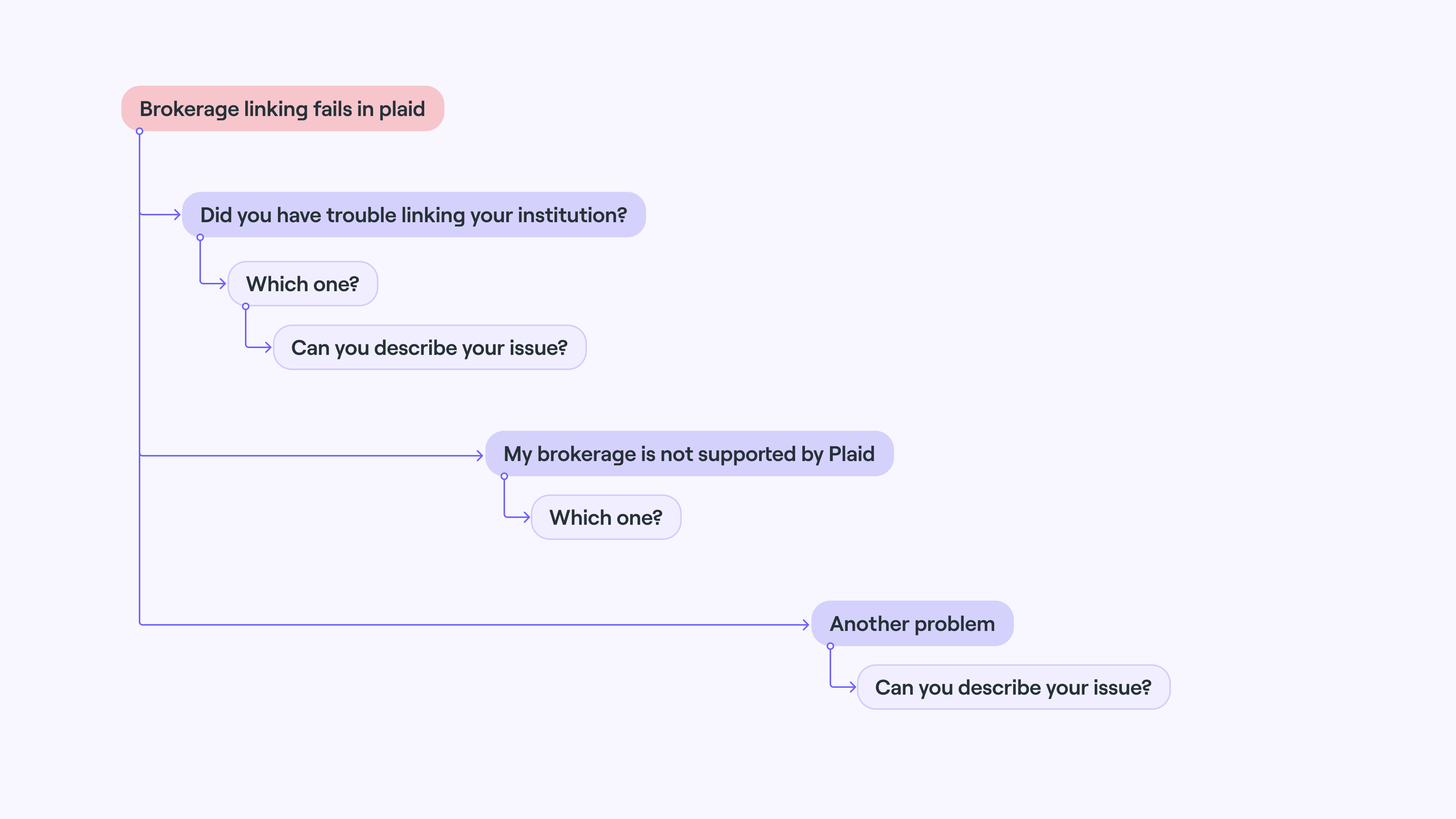
We expanded on this work by building our own feedback loop. When a connection failed, users could report the issue, select the affected brokerage or flag an unsupported brokerage, and add optional details. This gave us visibility into failure patterns we otherwise couldn’t detect. Eventually, we added a second integration through SnapTrade to increase brokerage support and to offset our dependance on Plaid.
Because certain brokerages took 20-40 seconds (or longer) to return assets, some users assumed the flow was broken. We introduced a lightweight animation to signal progress and soften the wait. This small moment of delight reduced confusion and led to fewer complaints about stalled connections.
Our financially savvy users sought tools to organize and engage more deeply in shareholder activism. To support this audience and foster collaboration, we experimented with features such as reactions, discussions, notification workflows, and user-generated proposals. These explorations laid the groundwork for a more dynamic, community-driven experience.
We introduced a Reactions feature on our TL;DR posts (short-form summaries of shareholder campaigns) to give users a low-effort way to signal interest or support. This helped us surface trending content and assess which issues were resonating most with the community.
For deeper engagement, we added a Discussions tab to the post detail view, where users could post and reply to comments, turning static updates into active spaces for debate among retail investor activists.
We encouraged users to enable notifications so they could stay informed about key events such as proxy deadlines, updates from companies they invested in, and new activity in discussions they were part of. We powered these notification workflows through Braze.
Based on repeated feedback from interviews with users who wanted to actively shape the platform's direction, we piloted a feature allowing users to submit shareholder activism ideas directly to the Troop team.
Understanding the high cost and friction of connecting a brokerage account, we focused on creating a commensurate reward for users. The core promise was a personalized experience based on their portfolios, with actionable insights tied directly to their holdings.
To deliver on that promise, we iterated on the Shareholder Activism Feed, experimenting with ways to make campaigns and insights more relevant to each user’s investments.
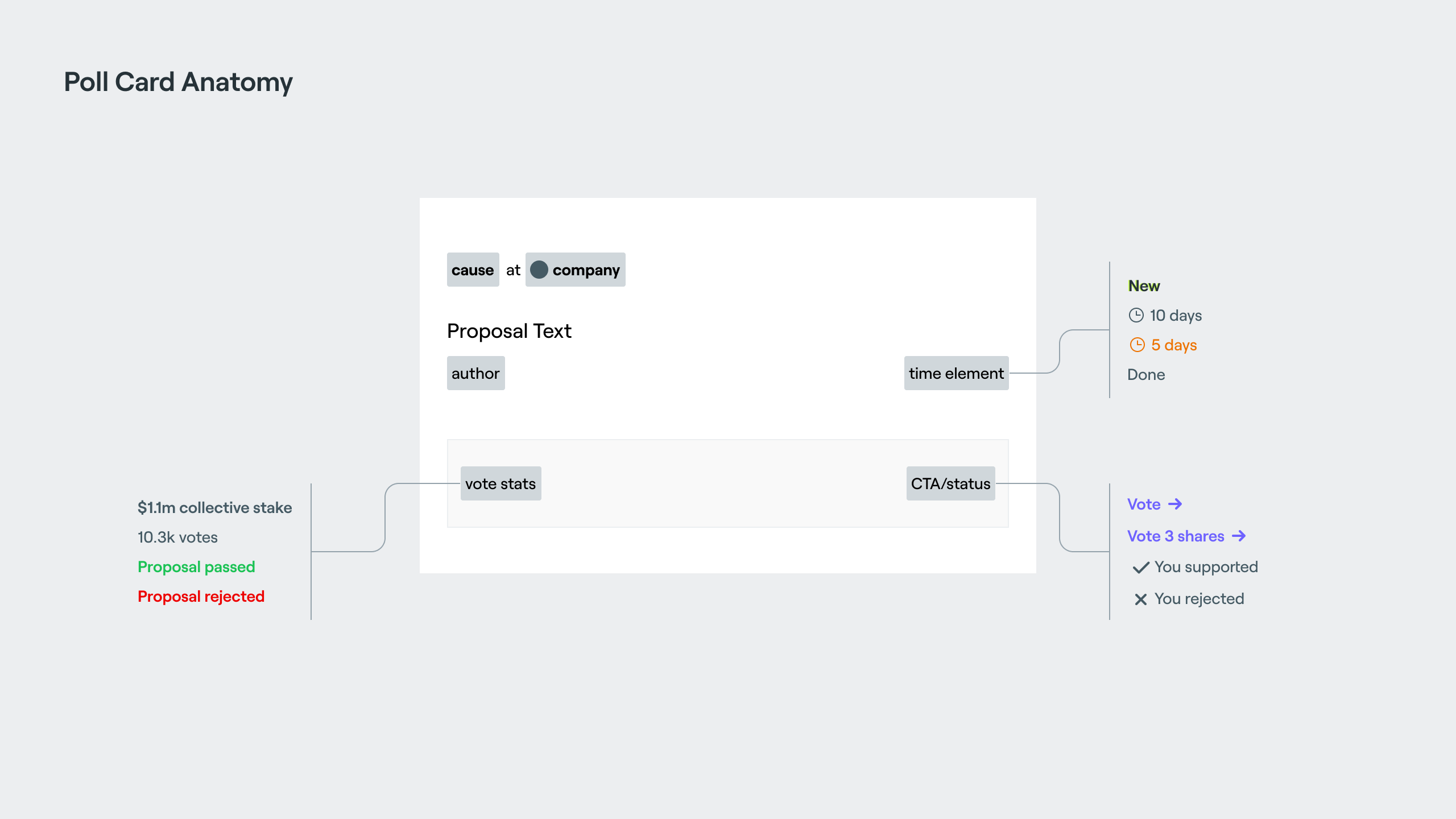
We evolved the poll card through multiple iterations to identify which affordances provided the most value to users. Early versions focused on surfacing the title, cause, company, time element, and vote statistics, in addition to the main call to action.
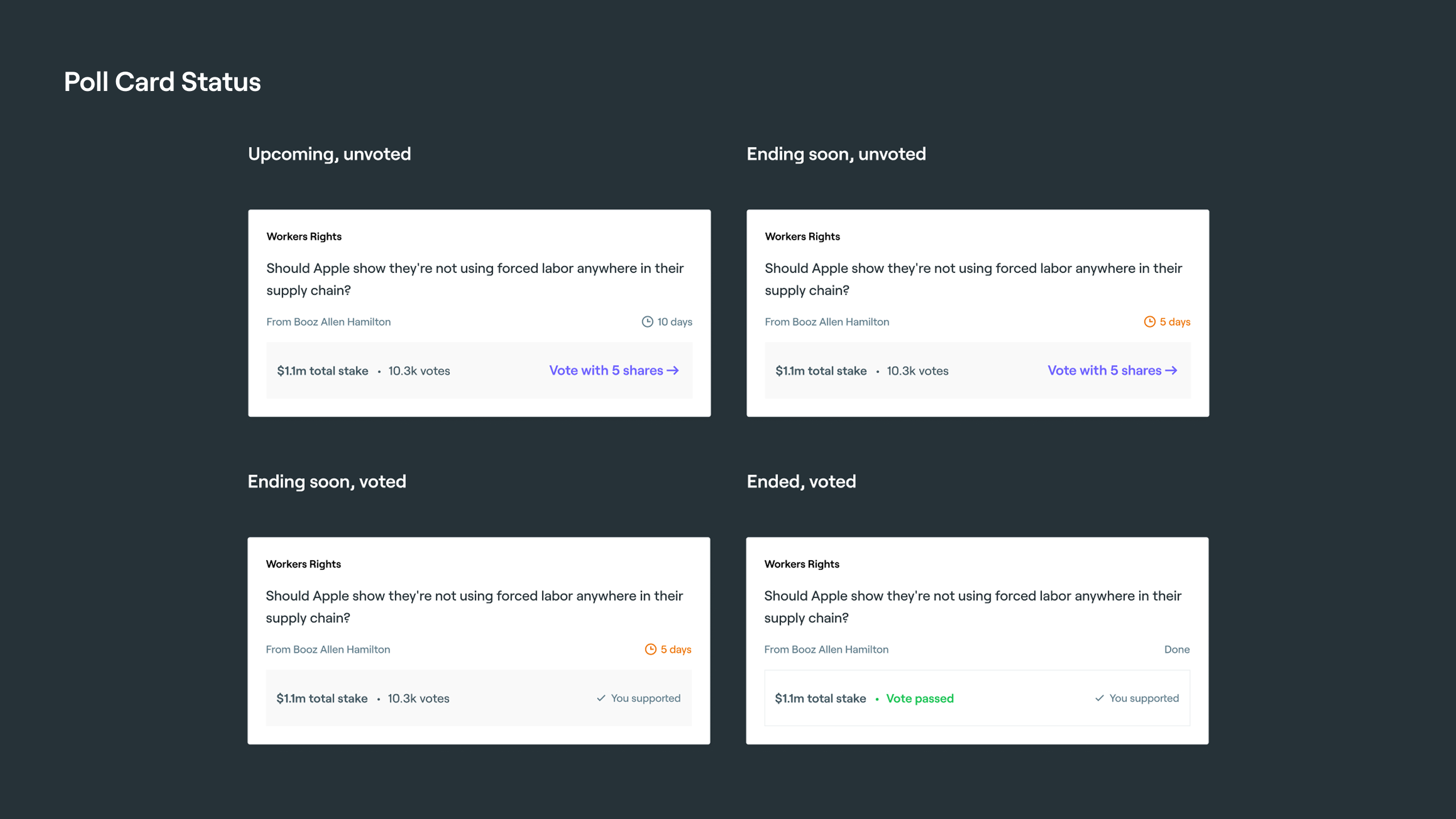
Early on, we added a dynamic time element showing how long users had left to vote, to prompt timely engagement with proposals tied to their portfolios (especially during the annual shareholder meeting season). As the product evolved, we explored ways to drive engagement outside of proxy season, which made the time element less central to the card.
In later iterations, we stripped down the poll card layout and tested several affordances to indicate a user’s shareholder status for a given company. This visual cue helped users quickly identify where they held voting power and reinforced their personal connection to each campaign.

We emphasized ownership within the poll voting experience as well. A green shareholder badge displayed the company logo, name, and number of shares owned, making each user’s personal stake clear.
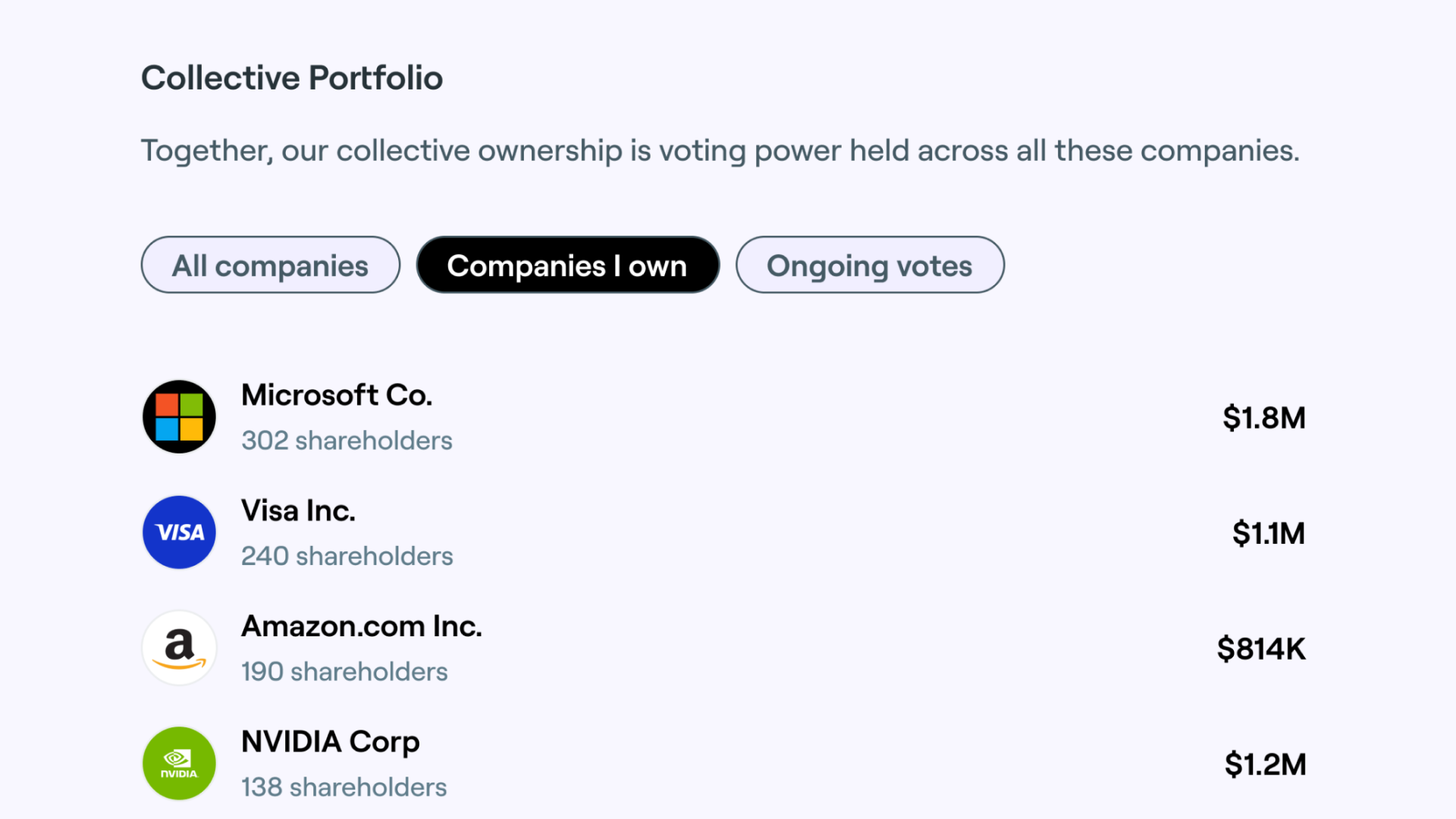
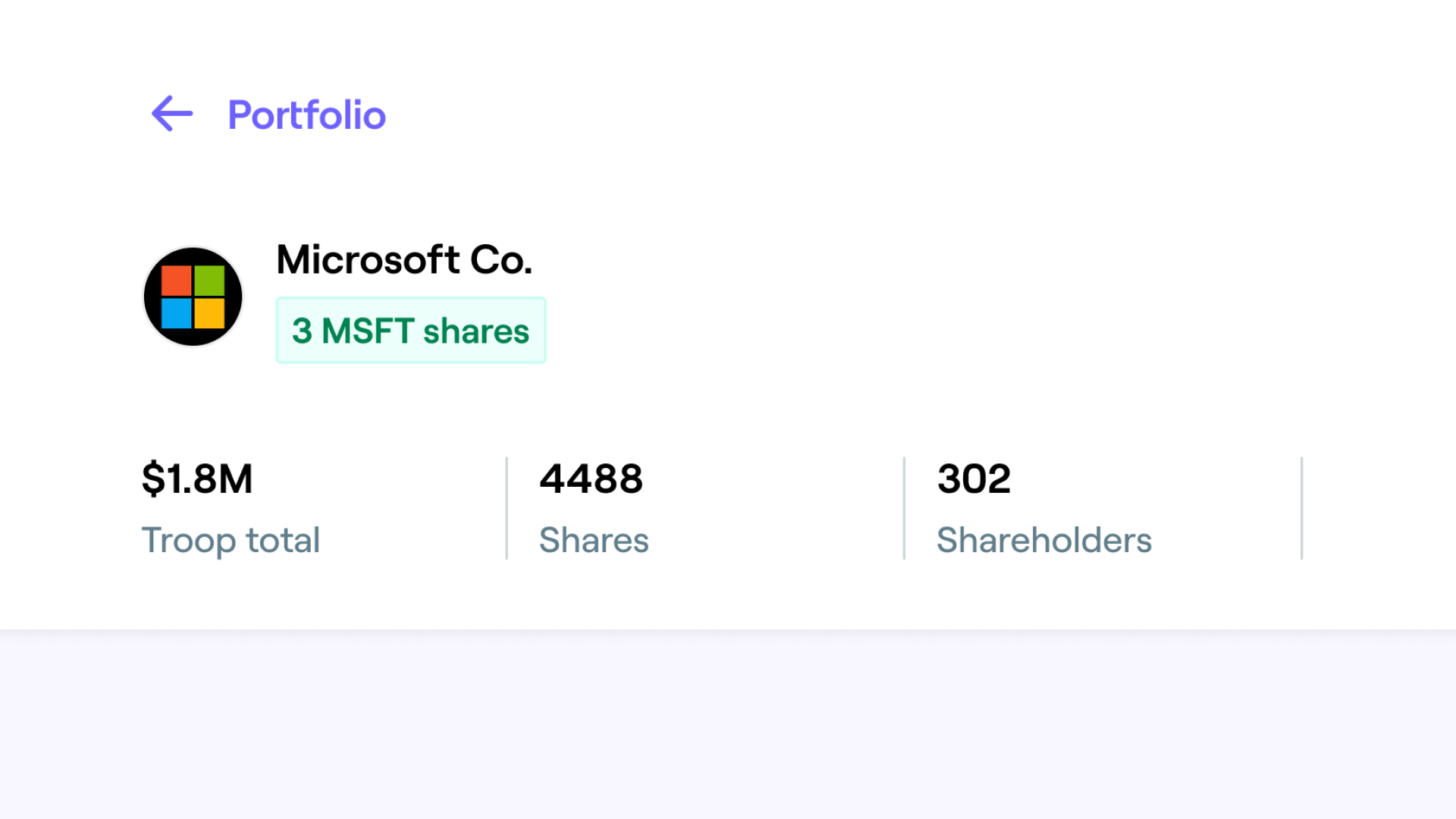
The Collective Portfolio section listed all companies invested in by users across the platform. From there, each user could view the companies they personally owned and see how many shares they held.
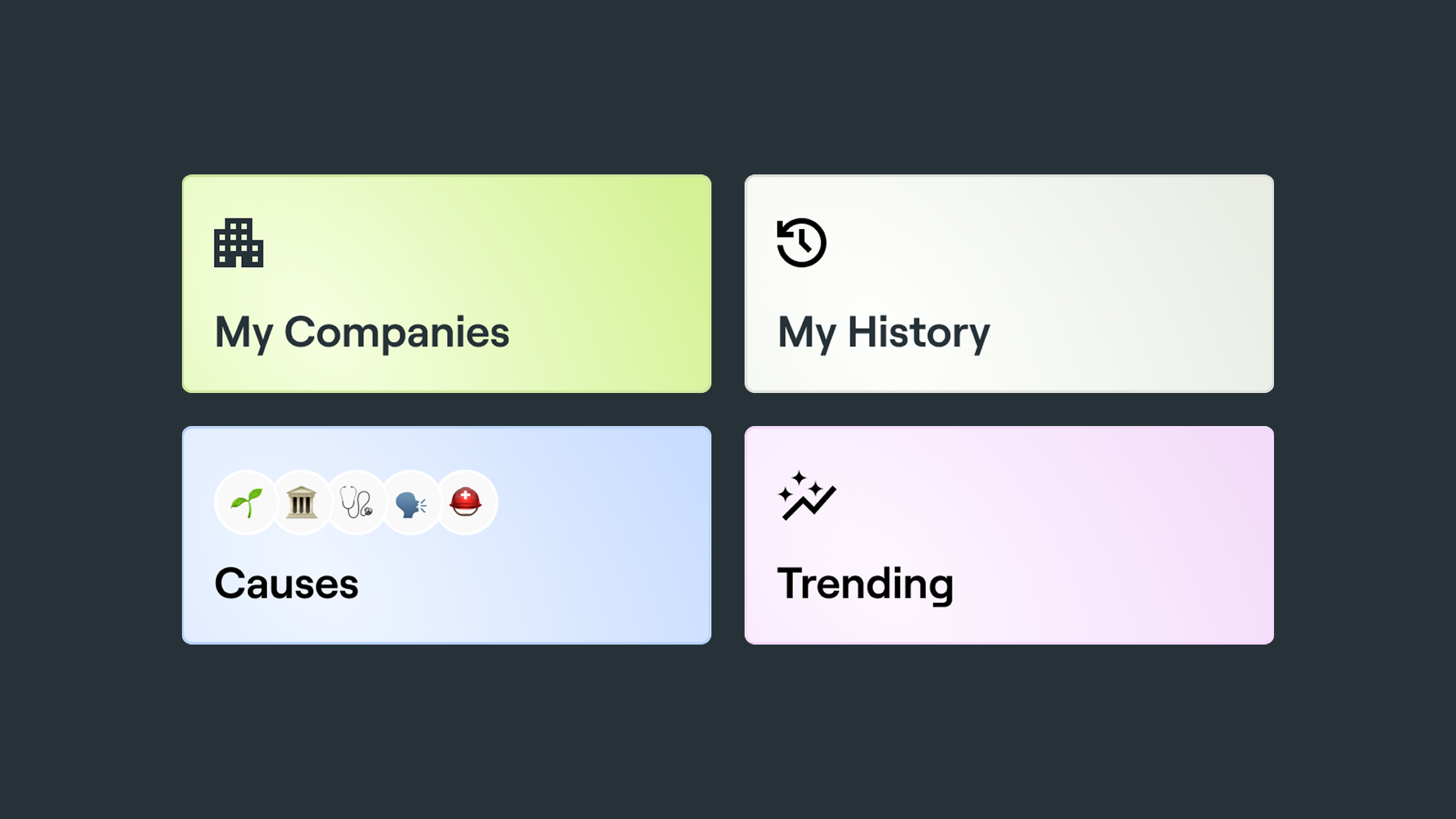
We introduced four categories in the feed to offer personalization and make content easier to navigate.
- My Companies: Posts and campaigns related to companies in the user’s portfolio
- My History: A record of posts the user has viewed or participated in
- Causes: Explore proposals by theme or issue
- Trending: Posts attracting the most attention across the community
Balancing ease of entry with personalization was key to optimizing the new user experience. Before asking users to connect assets, which we knew was a high friction point, we wanted to capture their attention early and maintain a sense of momentum.
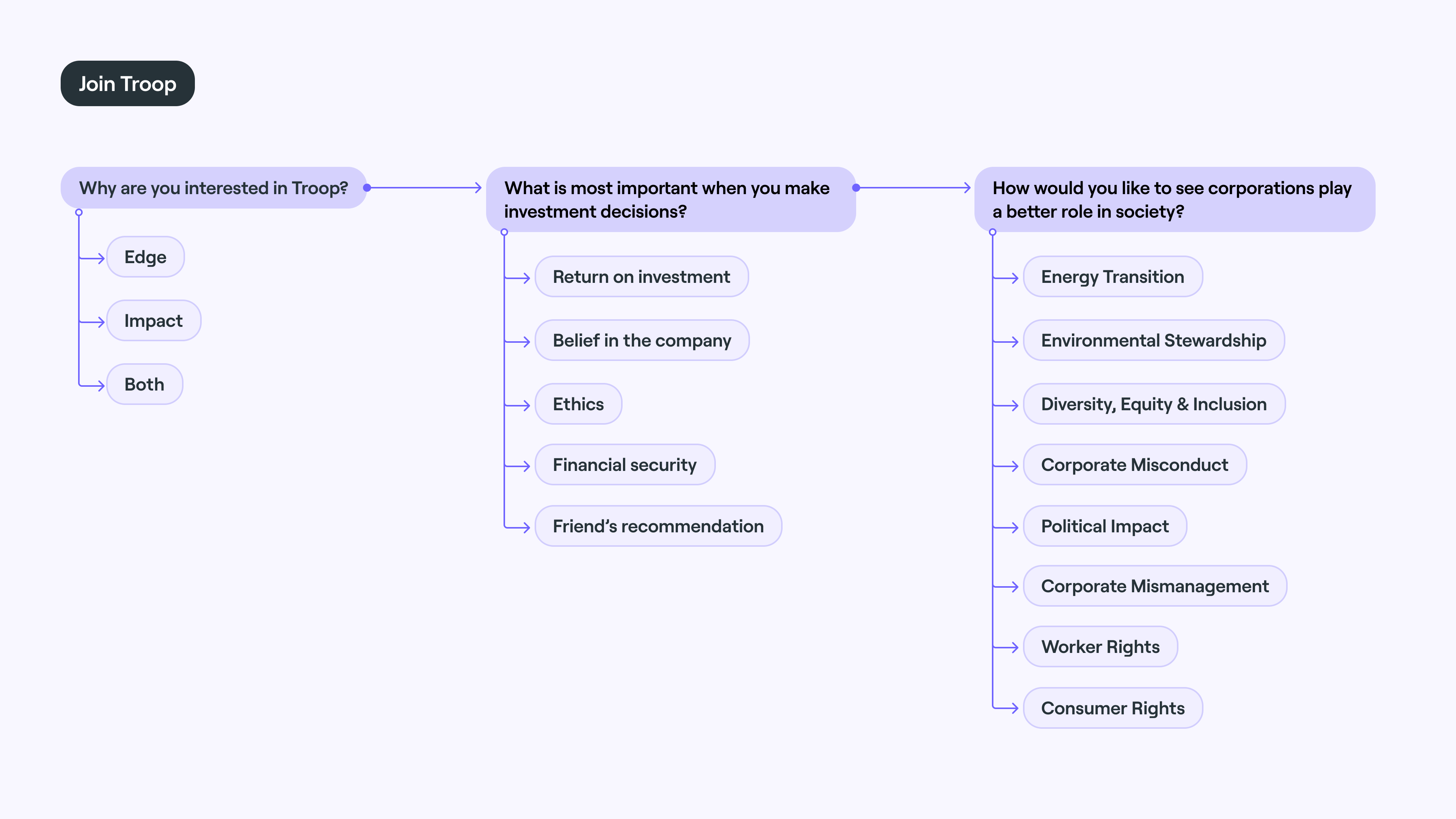
After many iterations, we landed on three user preference questions that would help us segment users by interests and financial experience:
- Why are you interested in Troop?
- What is most important when you make investment decisions?
- How would you like to see corporations play a better role in society?
We also experimented with sequencing and found that placing the preference questions before the email step created early progress and improved completion rates.
The platform gained early traction, showing strong interest in shareholder activism, particularly from a group of hobbyist activist investors who had already been experimenting with penny stocks.
- ~5,000 users acquired in the initial launch period.
- 10–15% week-over-week growth in the initial launch period.
- ~25% of users connected their brokerage accounts, overcoming a significant trust barrier.
- ~25% of users are active weekly, participating in discussions, polls, or proposals.
While we found a passionate niche audience among financially savvy retail investors, this group skewed smaller and less scalable from a business perspective. For Troop’s model to succeed, the platform needed to reach a critical mass of users to exert tangible influence in proxy contests (even with backing from activist funds or proxy solicitors).
Week over week, we saw small but meaningful wins, and early traction offered encouraging validation. Still, we were far from that threshold.
Ultimately, the company pivoted to a B2B model, selling ESG data and retail sentiment insights to institutional investors. Early engagement showed promise, but the path to monetization remained uncertain, a challenge many first-time founders face when building a mission-driven company.
A friend and advisor at the time told me, “First-time founders focus on the mission; second-time founders focus on go-to-market.”